Vikramaditya Varma: Culture, context and fashion.
I’m very happy to have had the opportunity to explore this topic with someone I consider among my closest friends. Vikramaditya Varma, or Vikram as I call him, is an architectural lighting designer based in Berlin. We met while studying our Master’s in Lighting Design at Wismar University, where I first noticed his interest in—and natural sensitivity toward—fashion.
I’m now pleased to share his thoughts through this edited summary of our conversation.
Is there a connection between your creative work and the way you choose your clothing?
— Absolutely. I usually dress according to the situation I'm about to engage in. It's not so much about "dressing for the occasion" as it is about preparing for a specific context, my role within it, my position, and, of course, the message I want to convey. I often find myself somewhere between the role of technical expert and creative lead, which means I want to be relatable to the engineers while also expressing that I am a creative person.—
Do you see personal style as something intuitive or intentional?
— I would say it's a combination of both. There's always a level of intention, especially in relation to the situation, as we discussed. I like to stay informed about what's happening in the fashion world, but at the same time I notice that I respond instinctively to different factors, such as my environment, my mood, and even broader trends. My choices evolve accordingly.—
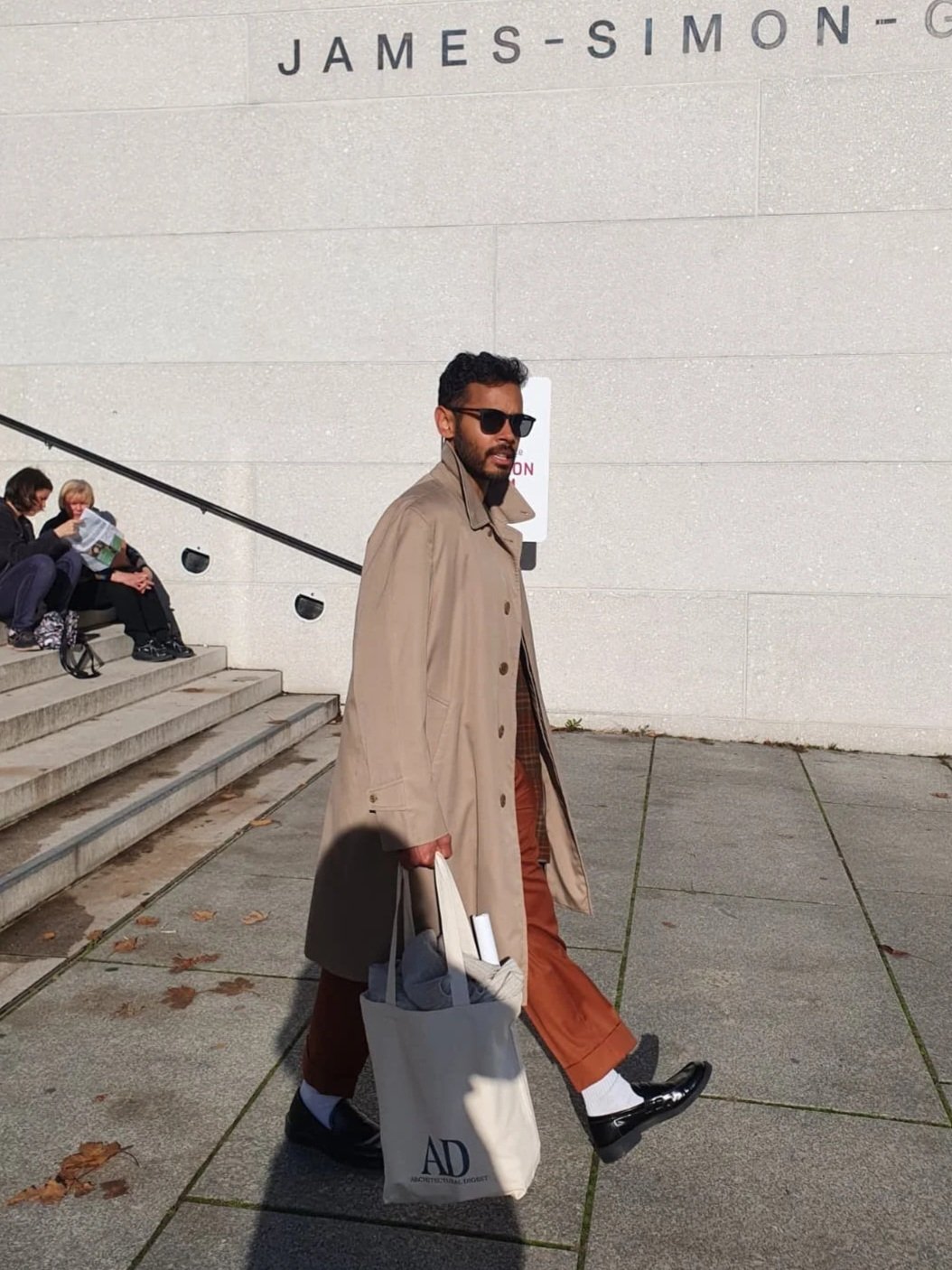
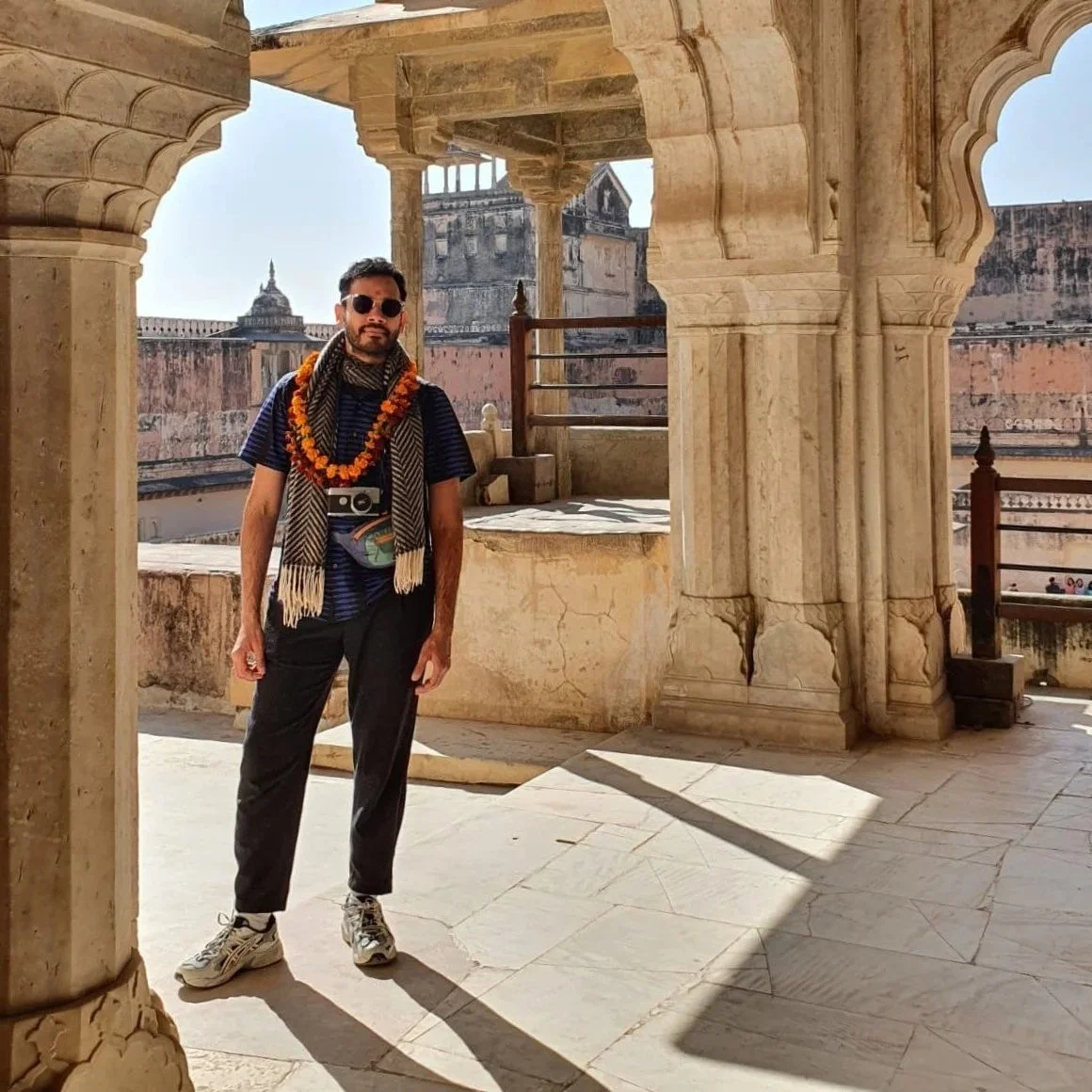
I also tend to integrate with my surroundings, so what I wear can change significantly depending on where I am, for example, in India versus Berlin. I enjoy participating in and celebrating local culture through clothing. The environment, and even the architecture around me, influences those decisions.
Does the thoughtful selection of clothing support or distract from your creative work?
— "Distract" is a strong word. I wouldn't say it distracts me. It's part of my preparation process. Sometimes a situation calls for careful consideration of what I wear, and other times it's the opposite. There are moments when there is no objective or expectation, and I embrace that by simply not thinking about it too much. On other days, I dress according to how I want to feel and how I want to be perceived because, in the end, clothing is a form of personal expression.—
How would you describe your personal style?
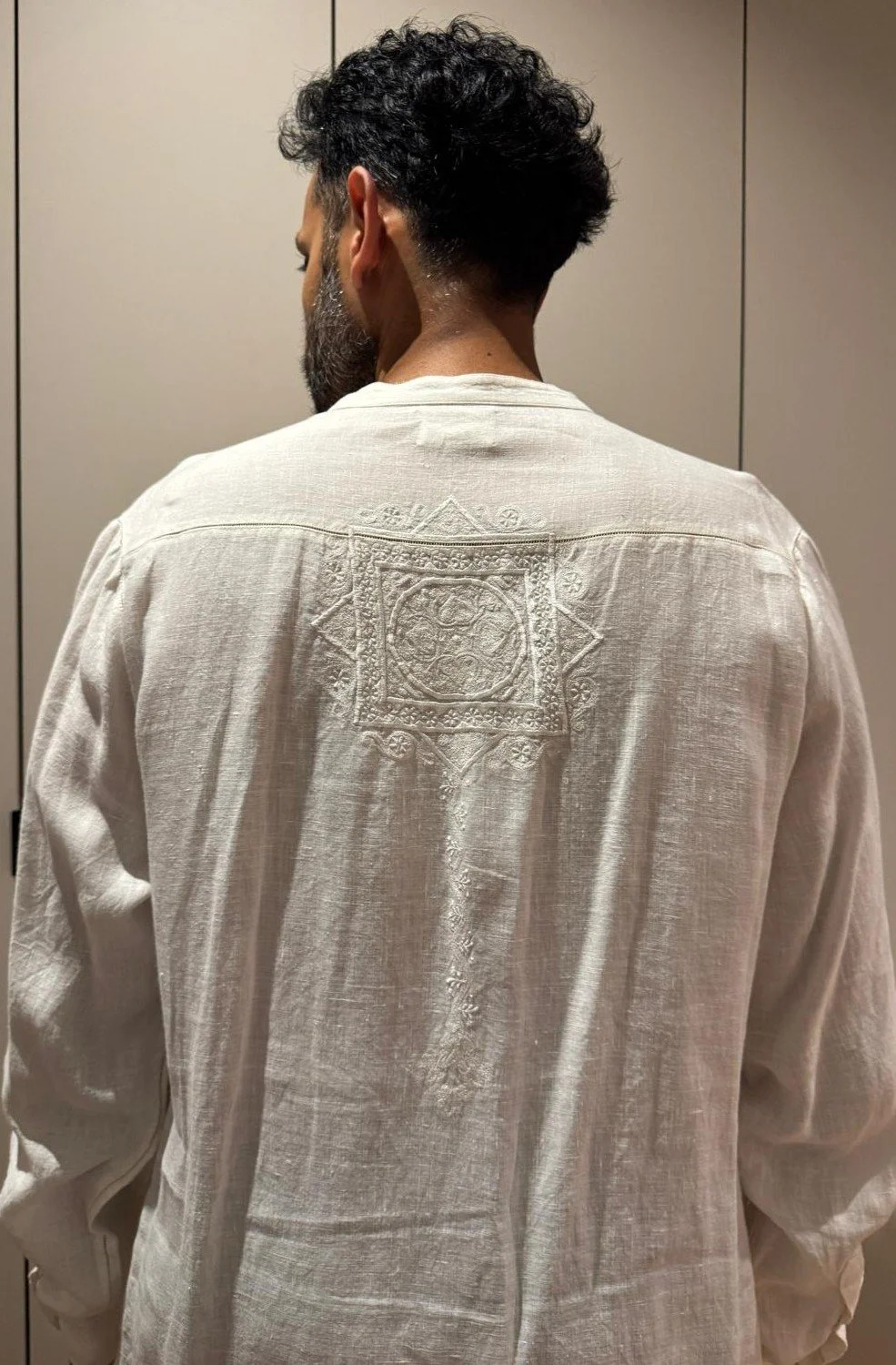
— My style moves between minimalism and maximalism, it really depends on where I am. I'm drawn to colour blocking and relaxed silhouettes, such as baggy trousers and oversized shirts. Lemaire has been a huge inspiration in that regard. At the same time, I'm interested in exploring patterns and richer colour palettes, especially when the context calls for them. I also admire the work of Nicolas Ghesquière and Dries Van Noten.
There's definitely a sense of duality. I'm often influenced by the place I'm in and by local traditions, and that adds another layer to how I dress.—
Do you notice differences in how architects and other designers dress—lighting designers, for example?
— In my opinion, there is a recognisable difference between architects and other designers. Architects often embody the familiar stereotype of being predominantly male and wearing black, while designers, including those working in fashion and interiors are a bit more diverse and tend to be more open to experimenting with colour.
In my experience, interior designers, in particular, have generally been more willing to explore colour and texture, which perhaps reflects the nature of their work.
With lighting designers, I think personal style often reflects one's background. People come into the profession from many different disciplines - engineering, graphic design, architecture, and that diversity frequently shows in how they dress. There isn't a prescribed image of what a lighting designer should look like, and I really appreciate that. It allows me to be something of a chameleon within a project team, adapting naturally to different people and contexts. —
Beyond the content of our conversation, what I value most is the clarity of Vikram’s thoughts and the way his perspective enriches this dialogue.
Thank you, my dear friend.