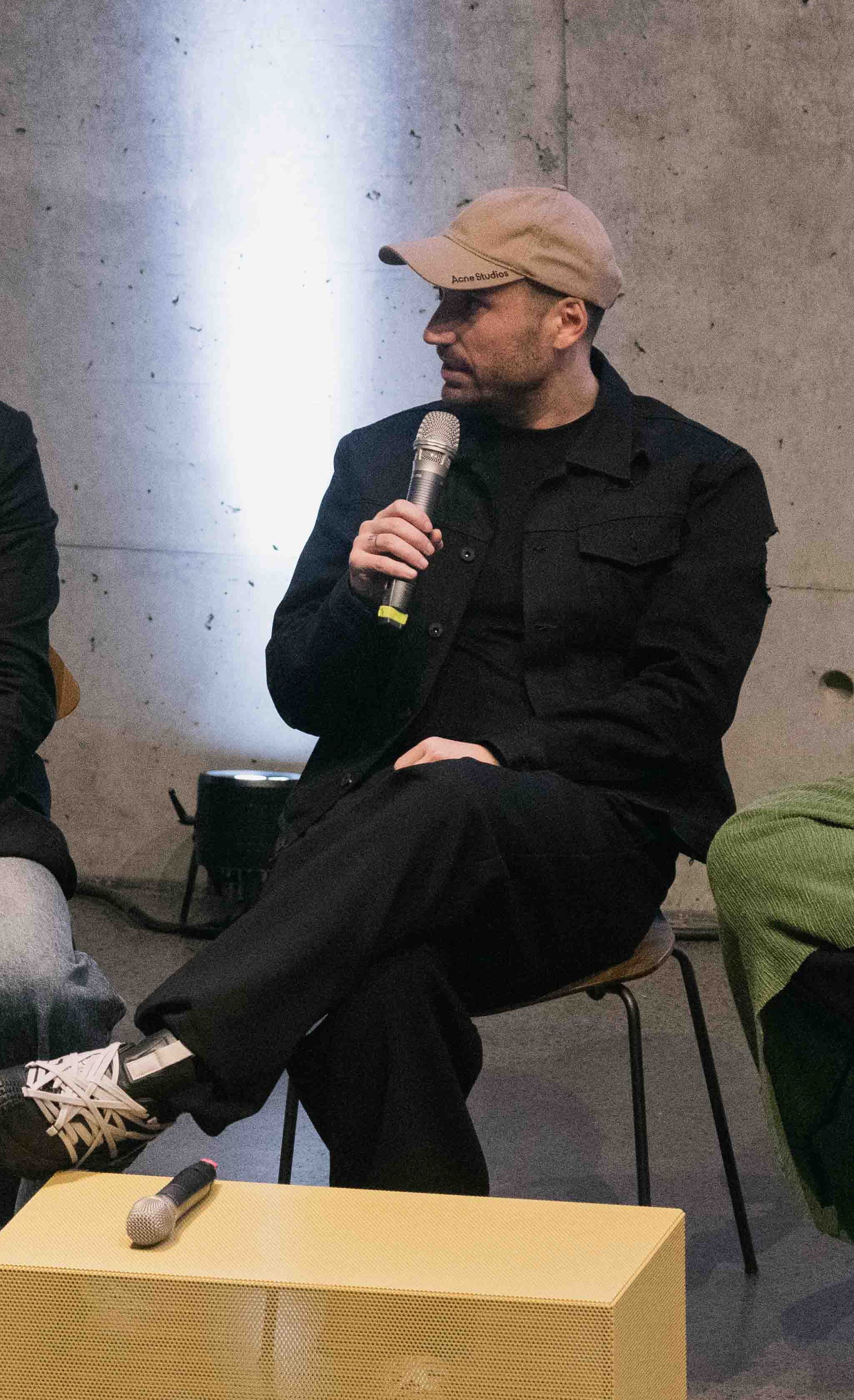
A Walking Portfolio: Tobia Zambotti
It is both exciting and meaningful to launch this editorial project—this ongoing exploration—with interior designer Tobia Zambotti.
At its core, this work considers the idea that the way designers present themselves—through clothing, posture, and personal style—becomes an extension of their creative identity. In this sense, attire is not separate from design practice, but part of the same visual language.
Recently, Tobia shared a reflection that speaks directly to this idea, articulating it with clarity and honesty:
“I’m always a little skeptical of designers who don’t know how to dress themselves properly. It’s kind of our walking portfolio, isn’t it? Lately I’ve been getting more and more into fashion and finding so much inspiration there for my interior design projects, especially in textures, colors, and details.”
Expanding on these ideas, Tobia reflects further on the parallels between fashion and interior design, where identity, material, and intention become central to both practices;
Lately, I’ve become increasingly interested in fashion, and I find myself drawing a lot of inspiration from it for my interior design projects, especially when it comes to textures, colors, materials, and details. At first glance, this might sound like a superficial observation, but I don’t think it is at all.
I believe people are deeply influenced by the energy, personality, and presence of those around them. Clothing plays a role in that. The materials, colors, silhouettes, and details we choose become part of how we present ourselves to the world and communicate
That’s also why I’ve never understood the criticism around visible logos or branded pieces. For me, wearing a brand isn’t about chasing status. It’s about appreciating and supporting a creative vision. It reflects a conscious curatorial choice, your personal taste, and, in a way, celebrates the work of the creative directors behind those brands; people who are ultimately fellow designers.
For example, I’ve followed Demna’s work since his Vetements days. His subversive, bold, and deeply cultural approach gave Balenciaga a rough yet sophisticated identity that I’ve always connected with. The same goes for Virgil Abloh and Off-White. I admired how he challenged the conventions of luxury fashion by introducing conceptual, street-inspired elements that felt fresh and disruptive.
Sometimes I simply enjoy giving credit to the designers whose work has inspired me, regardless of whether they’re still trendy or culturally relevant at the moment. who we are, often without saying a word.
I’m not particularly drawn to the idea of “quiet luxury,” either. A plain Gucci t-shirt made from exceptional materials but stripped of any recognizable design language doesn’t necessarily communicate what Gucci stands for. To me, a brand’s identity, symbolism, and visual codes are part of its value.
Finding the colors, materials, silhouettes, and brands that genuinely align with your personality isn’t easy. In many ways, it’s the same challenge we face when designing interiors for our clients. Selecting the right ingredients for a space is difficult because it requires understanding character, lifestyle, aspirations, and emotion. As designers, that’s exactly what we do, and I think the same mindset can apply to the way we dress ourselves.
Thank you, Tobia, for this thoughtful contribution, and for being part of this beginning.
Photo credits: Gunnar Sverrisson.